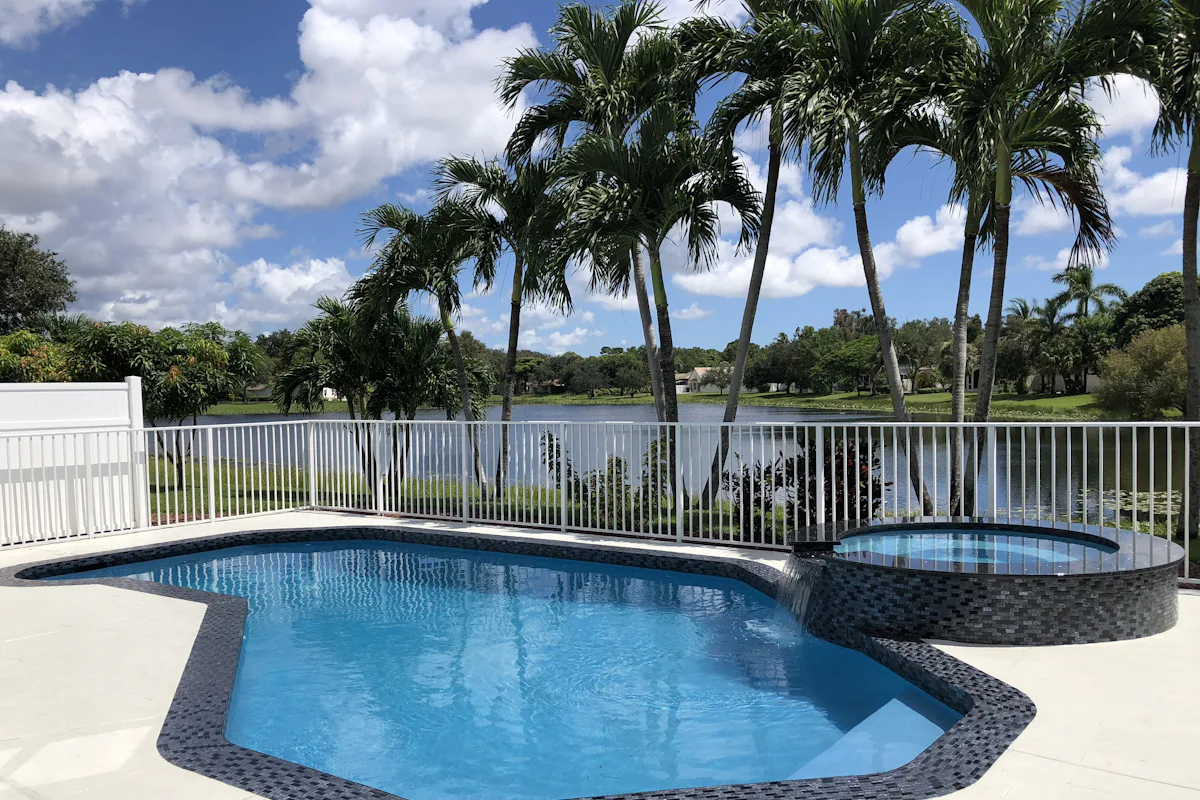
What does California require for a pool fence?
California's Swimming Pool Safety Act (Health and Safety Code section 115923) describes a qualifying pool enclosure. It must have:
- A height of at least 60 inches.
- No more than 2 inches of clearance between the ground and the bottom of the fence.
- No gaps that let a 4-inch sphere pass through.
- An outside surface without footholds or handholds a young child could use to climb.
- Gates that open away from the pool, close on their own, and have a self-latching device at least 60 inches above the ground.
An enclosure is one of several safety features the law recognizes for new or remodeled pools at homes. Your city's building department may have added requirements, and pool barriers in the City of Los Angeles are reviewed as part of the permit process. We confirm the rules for your address before building.
Which material works best for a pool fence?
Aluminum is the most common choice: it does not rust from splashing and chlorine, and its vertical pickets are easy to space correctly. Steel is stronger but needs a good coating near water. Vinyl works when you want privacy around the pool, as long as the design is not climbable from outside.
Can my existing fence count as the pool barrier?
Sometimes. A perimeter fence can serve as part of the enclosure if it meets the same height, gap and climbability rules, and every gate in it self-closes and self-latches. Horizontal rails on the outside face, gaps under the fence, or a gate that swings toward the pool are common reasons an existing fence does not qualify.
Which pool fence is right for you?
Choose aluminum if you want an open view and no rust. Choose vinyl if you want the pool area screened from neighbors. Choose a removable mesh-style barrier only if you understand it is a different product from a permanent fence; we focus on permanent fencing.